Ekster Key Case Review
After two weeks with the Ekster Key Case, we found a slim, premium way to quiet key jangle—great for set-and-forget carry, but not the easiest to adjust.
Our Verdict
Save time. Get access to brief summaries of our reviews so you can browse and make decisions more efficiently.
Pros
- It reduces key jangle and keeps pockets quieter
- The slim, compact design is easy to pocket
- Its premium materials present a clean, minimal aesthetic
Cons
- The coin-screw system is tedious if you change keys often
- It has a practical capacity lower than the stated maximum
- The movable D-ring can feel less tidy in daily use
Technical Details
-
Weight (oz)
0.78 oz (22.1 g)
-
Dimensions
3.1 in x 0.7 in x 0.6 in (7.9 x 1.8 x 1.5 cm)
-
Notable Materials
Leather, Aluminum
-
Warranty Information
Full Review
Key organizers sit in that interesting middle ground between essential and optional. On paper, they promise quieter pockets, fewer poke marks on your thigh, and a more streamlined way to carry something you interact with every single day. In practice, they can feel like overengineering a problem that never really bothered you—especially if you only carry a couple of keys. After two weeks of testing the Ekster Key Case, we wanted to see where it lands on that spectrum and whether its slim profile and premium materials justify adding one more layer to your everyday carry.

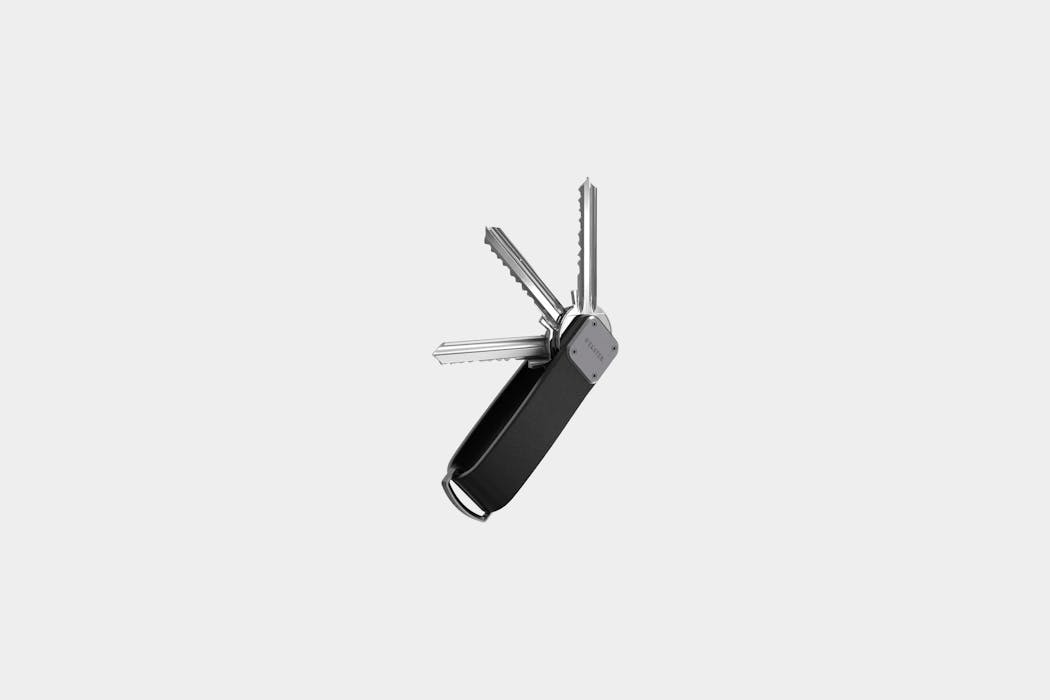
If you’re already familiar with key cases, nothing about the Ekster Key Case is going to shock you. Its core purpose is simple: to keep your keys from jangling around and make them easier to manage in a pocket or sling. Ekster offers it in recycled aluminum or premium leather, and we tested the leather version. It’s a clean, minimal design that feels well-made in the hand, but as with most organizers, the real question isn’t how it looks—it’s whether the experience is meaningfully better than just carrying loose keys.
The Rundown
At its core, the Ekster Key Case does exactly what a key case should do. It keeps keys stacked neatly, reduces noise, and makes grabbing a specific key a bit more controlled. Ekster markets one-handed access, and while you can easily flip a key out while holding the case, we didn’t find this dramatically better than pulling a single key from a loose key ring. It works as advertised, but it doesn’t feel like a standout advantage if you’re already comfortable handling keys without an organizer.
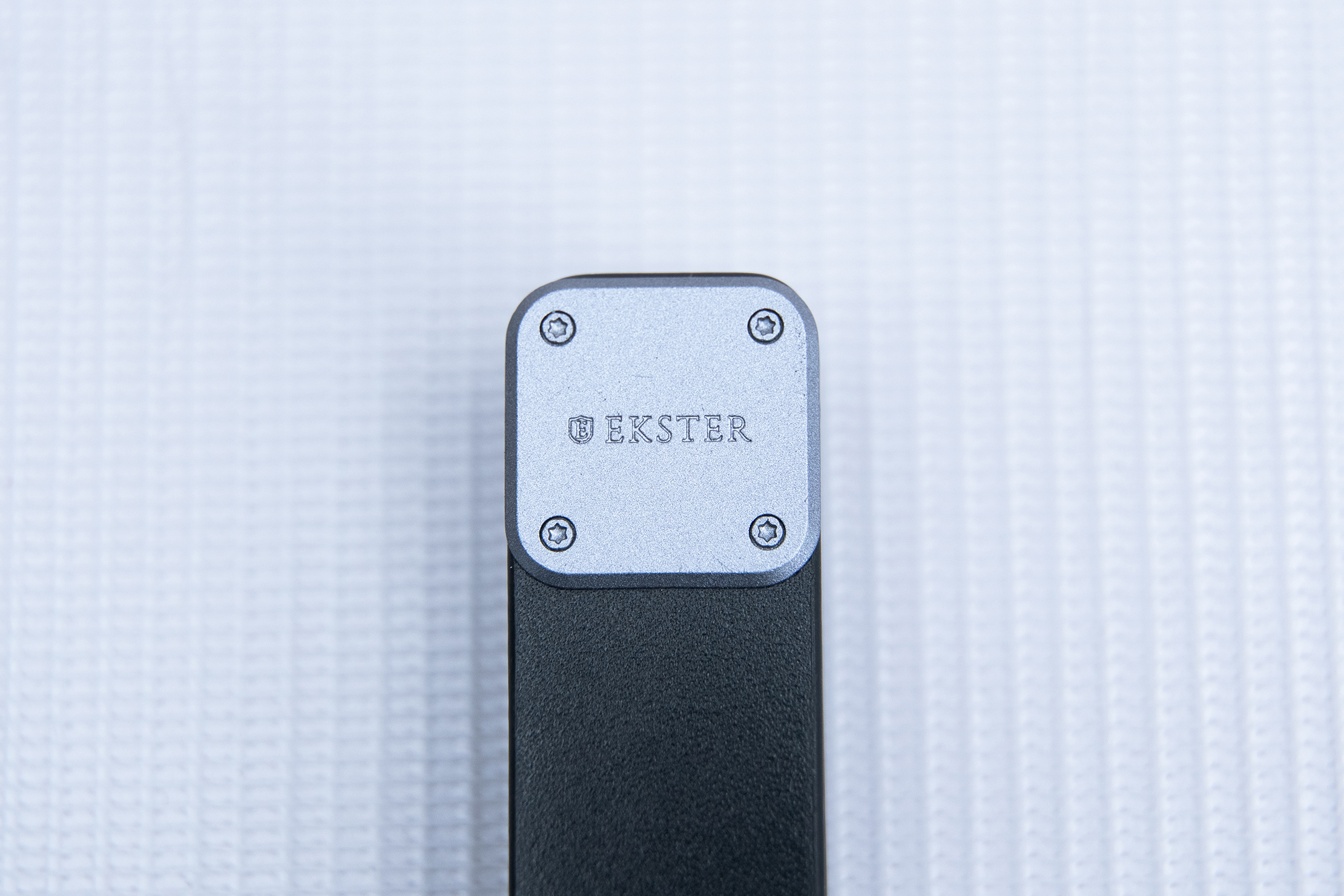
Adding and removing keys is done via a coin-screw mechanism. You slot a coin into a small divot, twist to loosen the post, and then stack your keys onto the internal pole. If you rarely change your keys, this is fine—it’s very much a set-it-and-forget-it system. If you’re someone who swaps keys often, though, the process can feel tedious. Lining everything up, especially once you add spacers, takes patience and, usually, both hands.
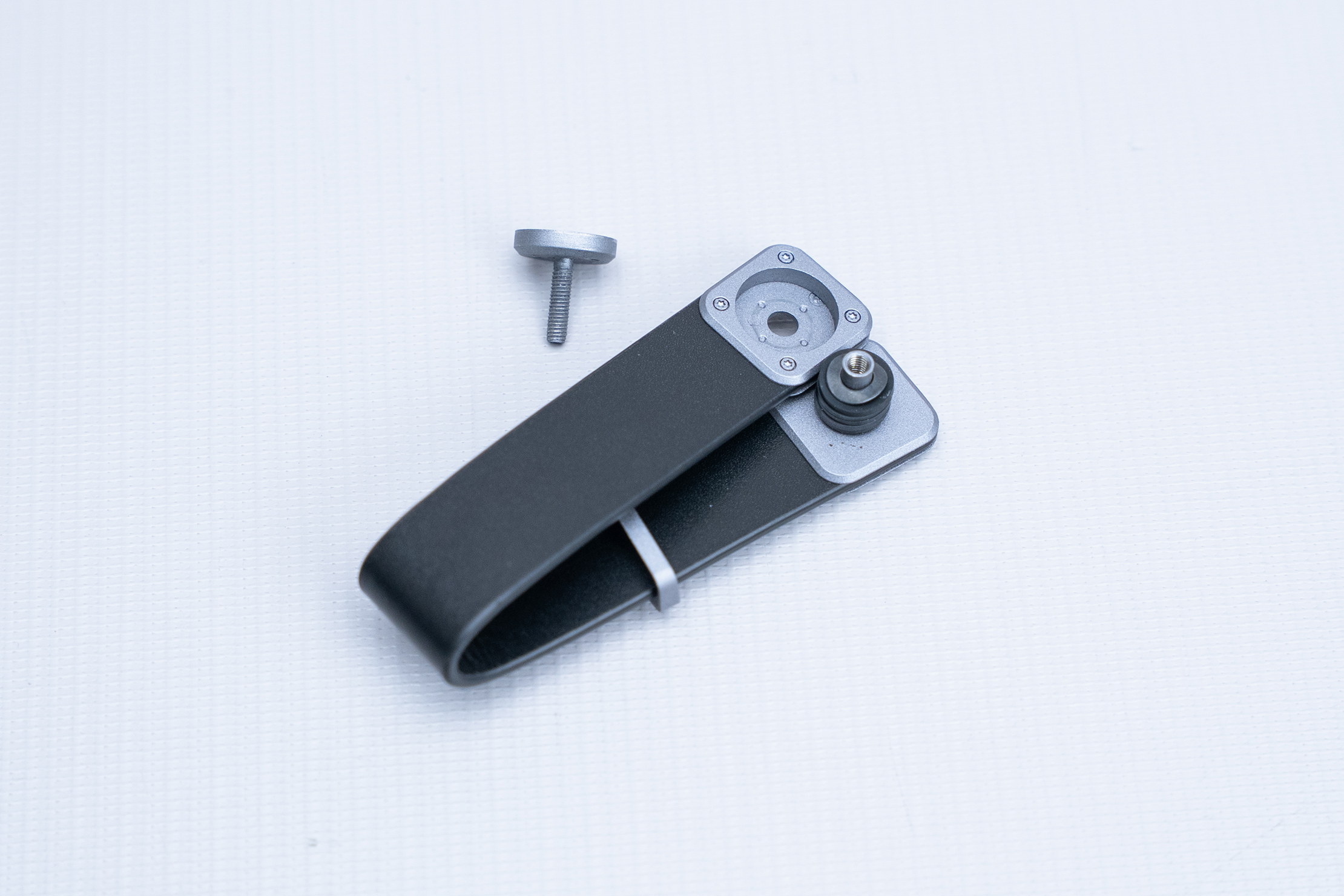
Ekster says the Key Case holds two to eight keys, but in our experience, three keys is the sweet spot. They include rubber spacers to reduce key-on-key friction and help the keys swing smoothly, but they also add bulk and make reassembly trickier. As you approach the higher end of the key limit, you’ll likely find yourself holding keys in place while trying to thread the post back through—something that feels finicky rather than refined. The movable D-ring works, but it can slide into awkward positions, which slightly detracts from the otherwise tidy aesthetic.
Packability
In the hand, the Ekster Key Case feels comfortable and premium. The leather option has a soft, approachable feel that makes it easy to grip, and the rounded edges help prevent hot spots in the pocket. It’s clearly more pleasant to carry than a loose bundle of keys, especially if you’re sensitive to pokes or sharp edges when sitting down.
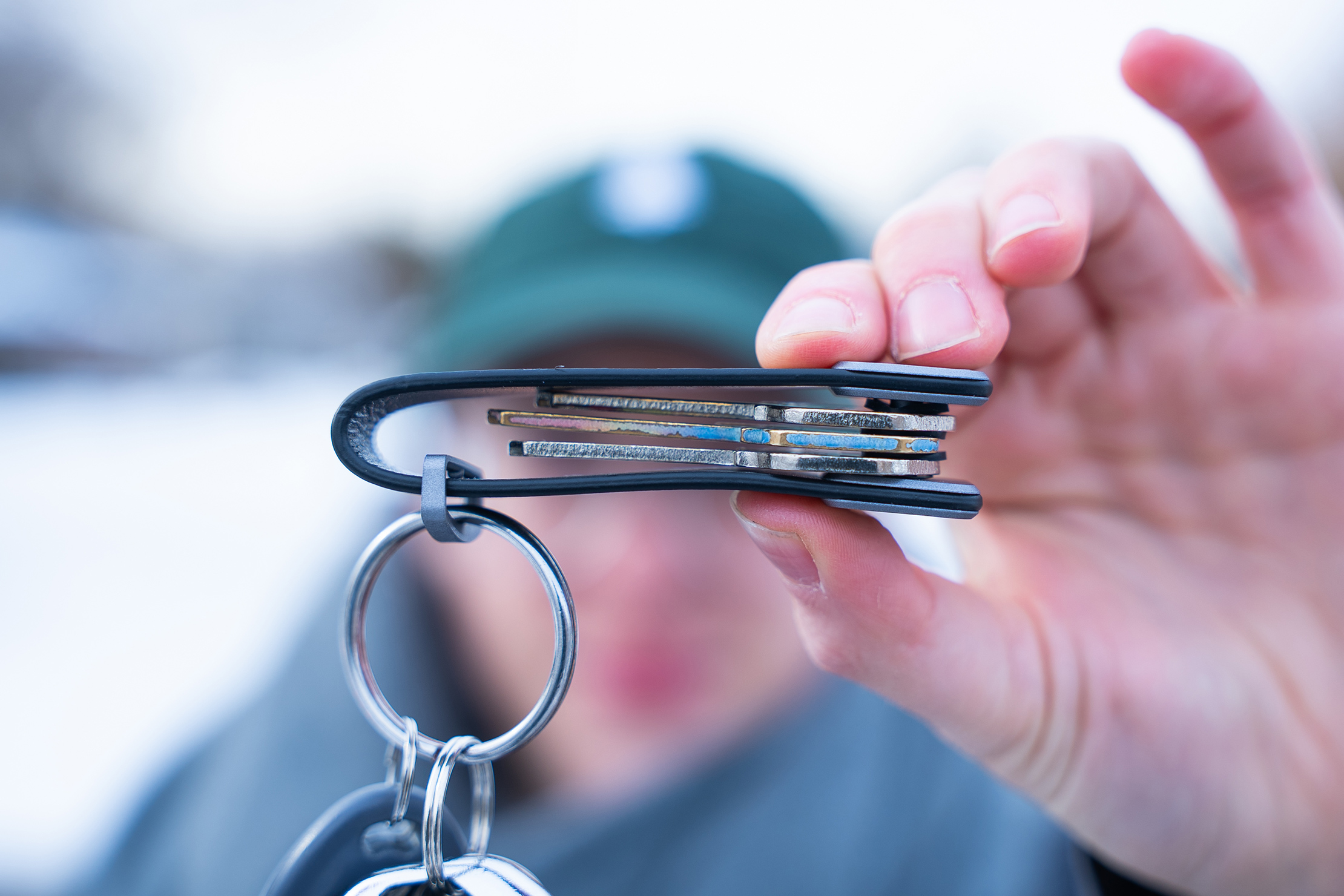
Pocket carry is where this key case really makes sense. It slips easily into jeans, jacket pockets, or small sling compartments without taking up much space. That said, the overall footprint depends heavily on what you attach to the D-ring. Car fobs and bulky accessories quickly become the dominant factor in how streamlined the setup feels. The Ekster Key Case itself stays slim, but it can’t magically minimize everything else you hang off it; we can hardly fault it for that.

In slings and bags, it’s equally easy to manage. The compact form factor keeps keys from tangling with other items, and it’s easy to grab without them spilling everywhere. If your goal is simply quieter, neater carry—especially in a small everyday bag—the Ekster Key Case delivers on that front without much friction.
Quick Comparison
We most often reach for the Orbitkey Key Organizer Pro when testing key organizers—comparing it to the Ekster highlights where the latter lands on the spectrum. The Ekster Key Case is slightly slimmer and has a more minimal profile, which some users will appreciate. However, Orbitkey’s ratcheting adjustment tool makes adding and removing keys significantly easier and more fluid. Orbitkey also features a fixed D-ring that doesn’t wiggle around, along with small touches like a quick-flip tab for frequently used keys.
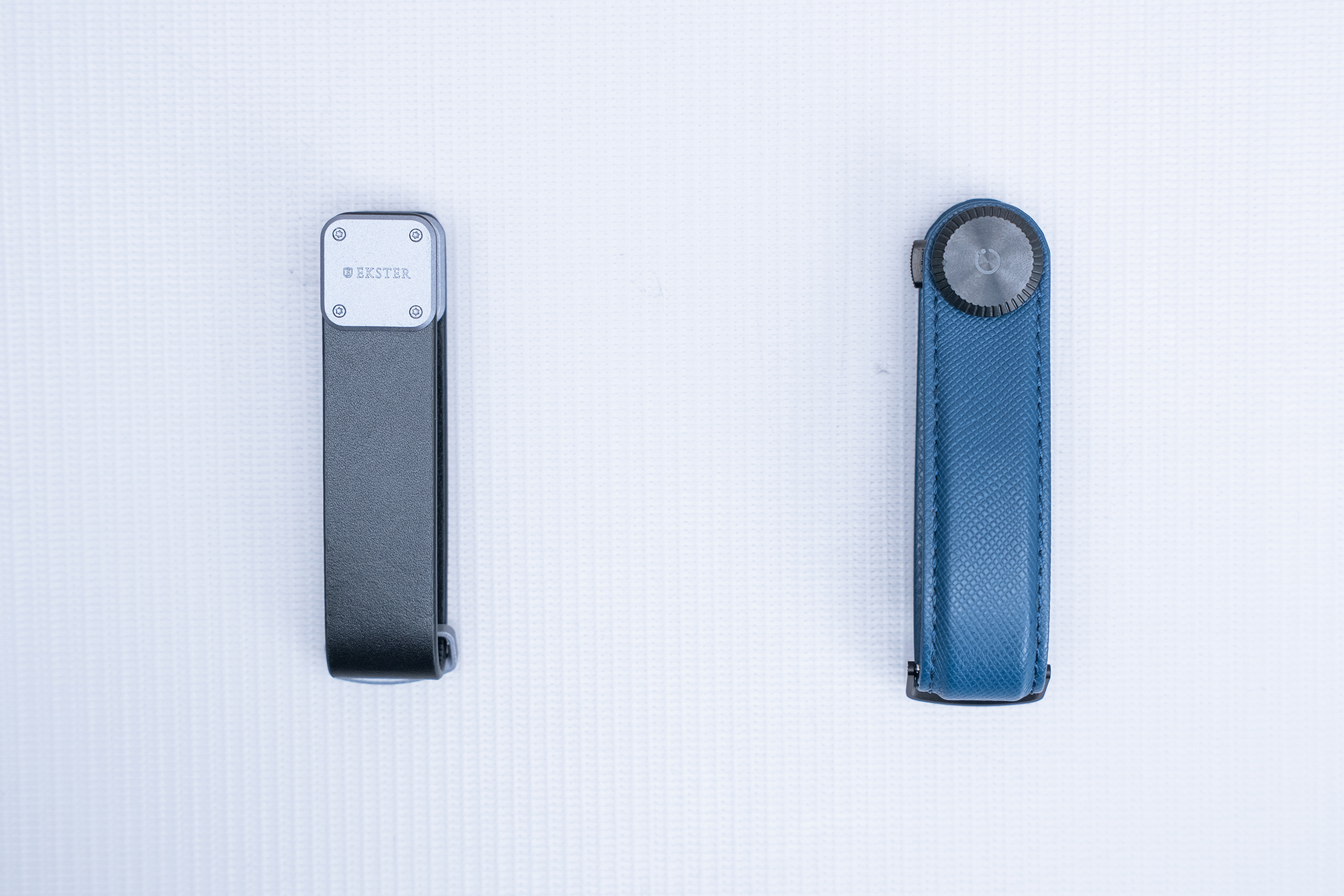
Notably, the Orbitkey Key Organizer Pro lacks spacers. If grinding metal peeves you, the Ekster has the edge there. Capacity is similar, with Ekster rated for two to eight keys and Orbitkey handling three to nine. Price-wise, they’re close enough that features become the deciding factor. While the Ekster Key Case is solid and well-made, we find Orbitkey’s added convenience and attention to detail give it a slight edge for everyday use.
Usage Timeline
Condition: Excellent
- Similar design to other key cases we’ve tested
- We like the add-on features such as the Finder Tag
- Lightweight design feels premium
Condition: Excellent
- Adding keys is tedious, though that’s usually the case with key organizers like this
- No blemishes to be seen

We’ve teamed up with ALPAKA to give away a selection of top travel gear! Check it out →




Get your questions about the Ekster Key Case answered from our team and the Pro Community right here on the page. Plus, join discussions with other members about gear, guides, and more.
Join Pack Hacker Pro or, Sign In